

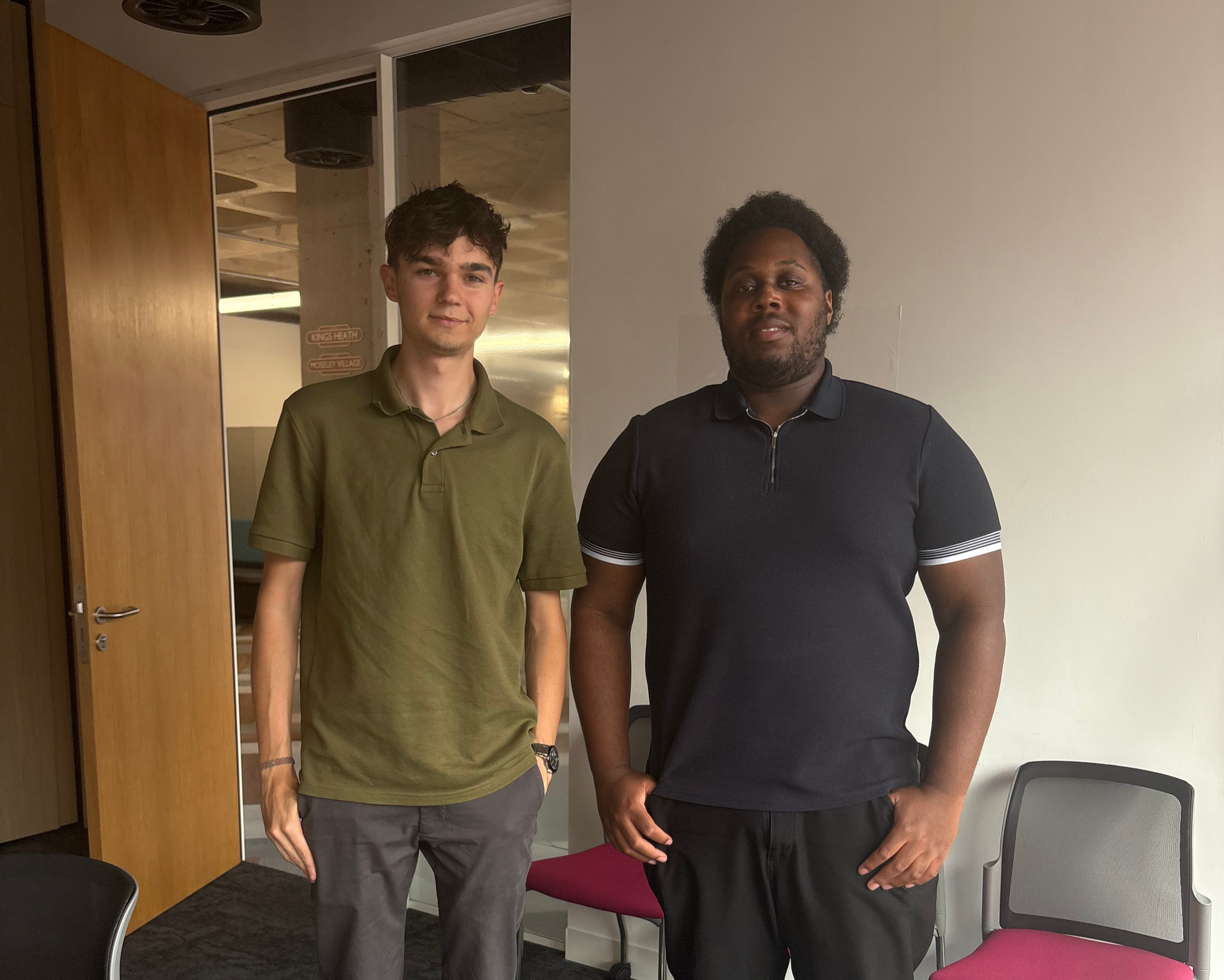
Two-early career engineers have been putting their academic knowledge into practice while supporting live projects at SLC, demonstrating the role practical industry experience can play in helping the next generation of engineers bridge the gap between university and the workplace.
Graduate Mechanical Design Engineer, Dylan Smikle-Jeffrey joined SLC on secondment in his first graduate role, while Thomas Sharpe returned to the business after first completing work experience with the team when he was in Year 12.
Over recent months, they have supported two key infrastructure projects, developing designs, working in CAD and visiting sites. The experience has also helped them understand how individual engineering tasks contribute to wider projects and, ultimately, improvements for the people who use them.
Dylan’s interest in engineering began when he was around 15. Visits to engineering workplaces gave him an opportunity to see what a career in the sector could involve and helped turn engineering from an idea into an achievable career path. However, as his studies took place during the COVID-19 pandemic, opportunities to gain practical industry experience were limited.
His secondment with SLC has given him the chance to apply his knowledge within a professional environment and develop experience across a range of projects. Moving from university into the workplace brought a steep learning curve as he became familiar with new systems and more structured ways of working.
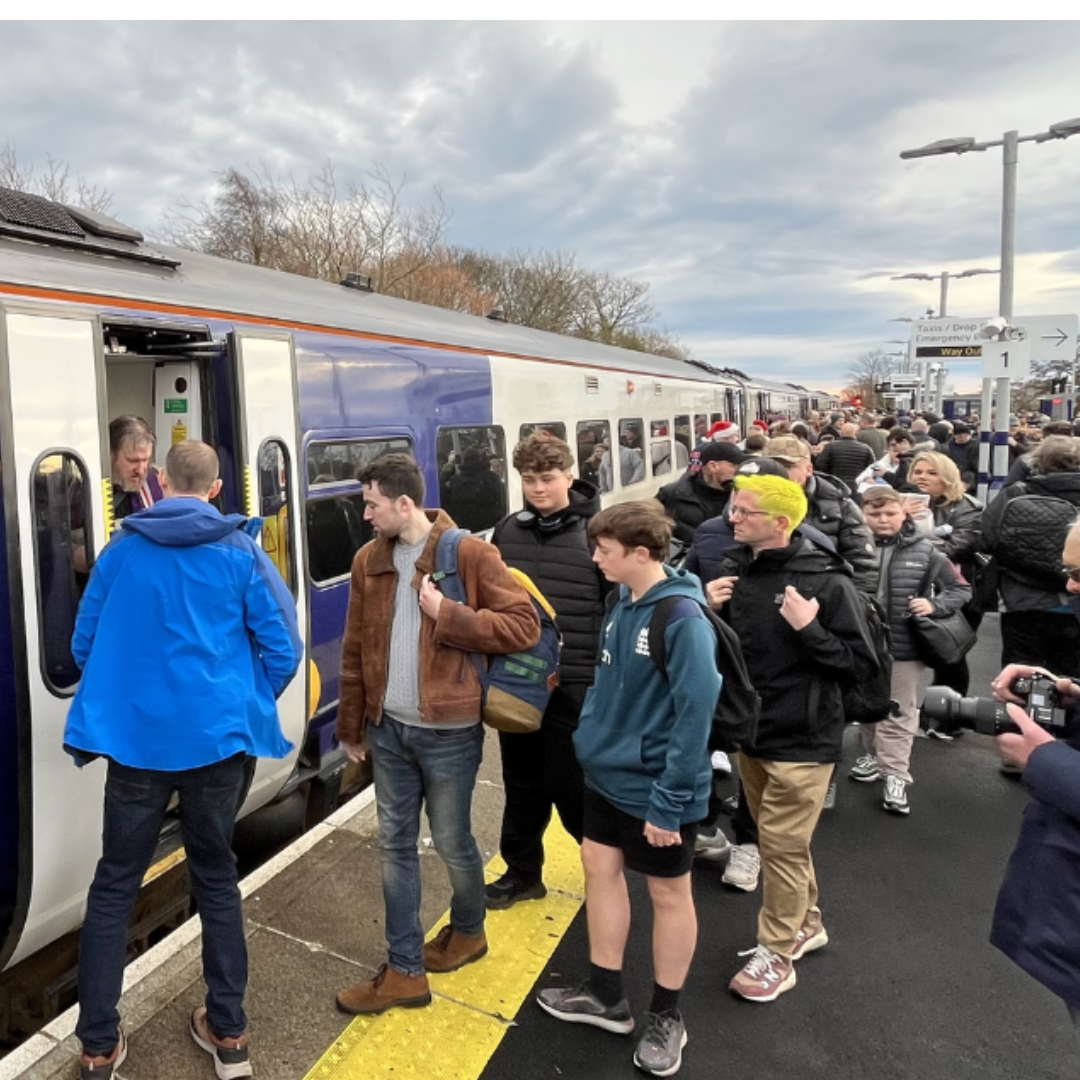
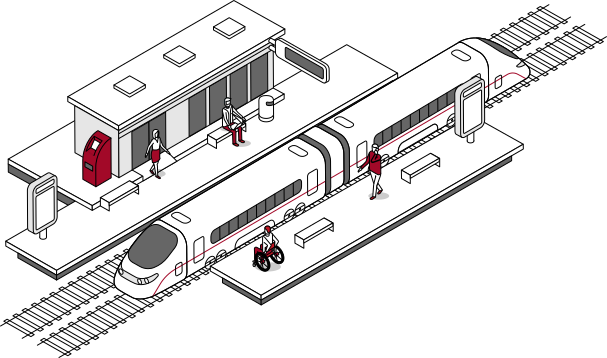
Support from colleagues helped him adapt, ask questions and build his confidence. During his time with SLC, he has contributed to design work, developed depot drawings and considered station accessibility and parking improvements. A site visit also allowed him to see first-hand the challenges passengers can experience and the difference that well-considered engineering solutions could make.
Dylan is particularly proud of how much he has learned in a relatively short period, including the progress he has made with CAD. Although he had limited knowledge of the rail sector before joining SLC, he has enjoyed discovering the variety of work it offers and is keen to continue exploring different areas of engineering.
Thomas first joined SLC for a week of work experience when he was 17 and deciding which direction to take at university. During the placement, he participated in engineering activities, including designing a car park. The experience gave him an early insight into the profession and helped confirm that engineering was the career he wanted to pursue.
Thomas subsequently studied Civil and Environmental Engineering at the University of Leeds. Having completed his bachelor’s degree, he will return to Leeds to begin his master’s degree in environmental engineering.
His latest experience with SLC has marked a significant step forward from his original placement. Rather than receiving his first introduction to engineering, he has been able to apply what he has learned at university and take responsibility for meaningful project work.
Much of his time has been spent using CAD, which he has mostly developed through practical experience. Working on a live project helped him strengthen those technical skills while also improving his report writing and understanding of the reasoning behind engineering decisions.
Thomas hopes to work in areas including water and carbon in the future, building on his academic interests and his dissertation exploring carbon and architecture.
Both Dylan and Thomas have valued the support they received from colleagues across SLC. Working within an SME has allowed them to meet experienced professionals from different parts of the business, ask questions and learn directly from others while being trusted with work that carries genuine responsibility.
They have also taken opportunities to become involved in the wider life of the business, including representing SLC at the recent Birmingham Fives charity football tournament. These experiences helped them build relationships with colleagues and feel part of the team.

Sam Uren, Director of Engineering said: “There is a big difference between learning engineering principles and seeing the consequences of those decisions on a live project. Giving early-career engineers meaningful responsibility, supported by experienced colleagues, helps them develop the technical judgement and confidence the industry needs.”
Their advice to other aspiring engineers is to seek out as much practical experience as possible, including placements and site visits, ask questions and be honest when support is needed. While university provides an important academic foundation, seeing engineering applied to real projects can offer a new perspective on both the work and the industry.